


New Squatter Eviction Protections: What Oregon Landlords Need to Know About HB 3522
Hey there, fellow Oregon landlords—Christian Bryant here, aka Mr. Portland Landlord, coming at you from the front lines of property management in the Portland Metro and beyond. If you've ever woken up to find someone treating your vacant rental like their personal Airbnb (without the booking fee), you know the headache of dealing with squatters. It's like discovering an uninvited houseguest who not only raids your fridge but also changes the locks while you're out. But fear not! With the fresh ink on HB 3522, which kicked in on January 1, 2026, we've got some new tools in our toolkit to boot these unauthorized occupants faster than you can say "eviction notice." Today, we're diving deep into what this means for you, especially if you're juggling properties in high-risk spots like Portland where homelessness spikes and vacant units can turn into squatter magnets overnight.
As President of the Portland Area Rental Owners Association (PAROA) and Northwest Rental Property Management (NWRPM), I've fielded my share of frantic calls on this topic. Our Helpline logs show it's not the top query—non-payment and security deposits still reign supreme—but it's steady, with 2-4 inquiries popping up monthly in late 2024, spiking during winter when folks seek shelter. All-time data from 2021 onward reveals about 20-30 squatter-related calls annually, often tied to evictions or unauthorized holdovers. It's a pain point that's only grown with urban vacancy rates climbing, but HB 3522 is here to restore some sanity to our property rights. Let's break it down, Oregon-style: practical, no-nonsense, with real-world examples to keep you out of court (or at least winning when you get there).
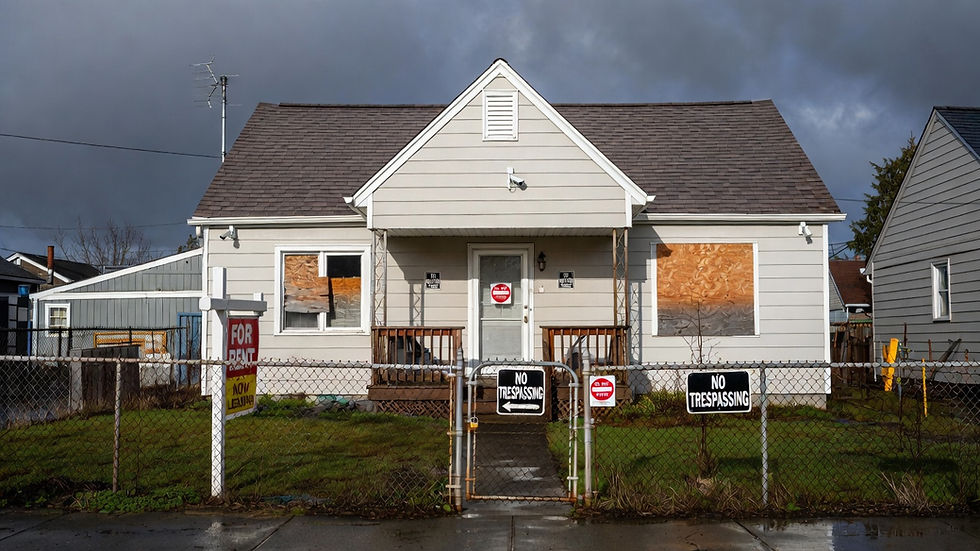
Understanding Squatters in Oregon Law
First things first: Not every uninvited person crashing on your property is a squatter. Oregon law draws clear lines between three types of unauthorized folks—think of it as the "Goldilocks" of trespassers: one's just visiting, one's overstaying their welcome, and one's straight-up breaking in. I pulled this straight from my class transcripts on common tenant violations, where I teach landlords how to spot the differences before things escalate.
Unauthorized Guest: This is someone your tenant invited in, but they've stuck around longer than your lease allows. Picture this: Your tenant's "cousin from out of town" shows up for a weekend barbecue and suddenly there's an extra car parked nightly, a bed in the spare room, and toothbrushes multiplying like rabbits. Signs? Extra vehicles, converted offices into bedrooms, or neighbor complaints. If your lease caps guests at, say, seven days a month (like the ORHA standard), and they've blown past that without your nod, it's a violation. But here's the key: The original tenant is still there. You don't evict the guest directly; you hit the tenant with a 14/30 notice: Fix it in 14 days (screen the guest or boot them) or everyone's out in 30.
Unauthorized Occupant: Now we're escalating. This starts like a guest—tenant invites them—but then the tenant bails, and the "friend" stays put. Maybe it's a sublet gone wrong (your lease should ban subleasing without permission, right?). Or the tenant ghosts, leaving their buddy holding the bag. Crucial warning: If you knowingly accept rent from this person (check names on payments!), boom—they're a tenant with rights. Avoid that like the plague; refuse payments unless they're from your actual tenant. You'd use a 24-hour notice for unlawful occupants, naming them as John/Jane Doe if unknown.
Squatter: The big bad wolf of the bunch. Per ORS 90.100(47), a squatter is "a person occupying a dwelling unit who is not so entitled under a rental agreement or who is not authorized by the tenant." Translation: No invite, no permission—they just moved in. Think break-ins at vacant units or folks setting up camp in foreclosed properties. Unlike guests or occupants, squatters were never legit; they're pure trespassers. And no, a tenant holding over after eviction doesn't count—that's a different beast.
Why does this matter? Mislabeling can tank your case. Call a squatter a tenant, and suddenly they're entitled to notices and hearings. Get it wrong, and you're the one paying legal fees. In Portland Metro, where homelessness policies intersect with rising vacancies (thanks to post-pandemic shifts), squatters hit harder—think urban areas with easy access to empty homes during winter peaks.
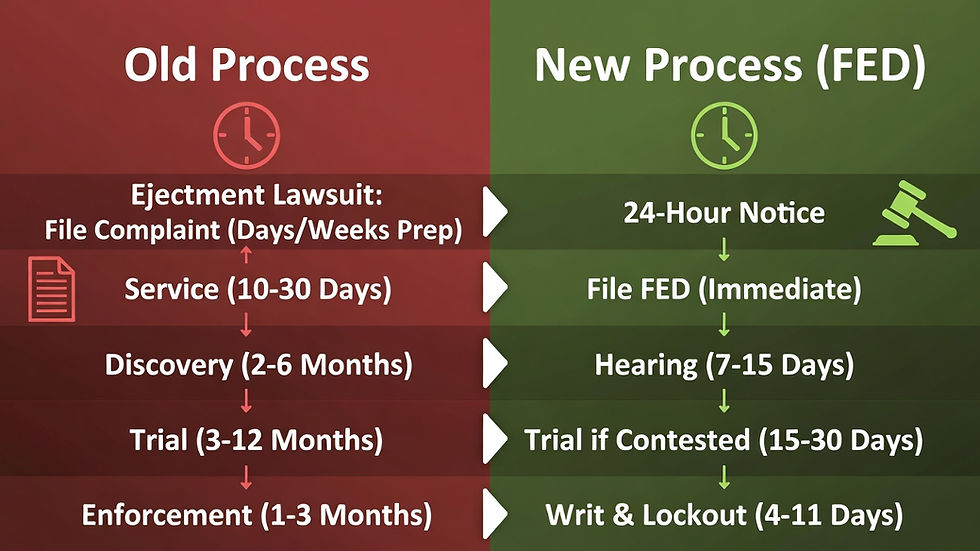
The Old Process of Oregon Squatter Eviction vs. HB 3522 Changes
Ah, the good ol' days—pre-2026, dealing with squatters was like wrestling a greased pig: Slippery, frustrating, and expensive. You'd file an ejectment lawsuit under ORS 105, which could drag on 3-6 months and cost $5,000+ in fees, lost rent, and repairs. Meanwhile, your "guest" racks up utilities on your dime or trashes the place. Portland landlords know this all too well; with homelessness up 20% in recent years (per HUD data), vacant units in areas like East Portland became prime targets.
Enter HB 3522, effective January 1, 2026. This bill flips the script by letting landlords use the streamlined Forcible Entry and Detainer (FED) process for squatters—just like evicting a bad tenant. No more ejectment marathons; now it's a 24-hour notice, file at county court, hearing in 7-14 days, and sheriff enforcement if you win. Total timeline? 1-2 months, with just court fees (around $255 in Multnomah County).
Here's a quick comparison table to visualize the glow-up:
Aspect | Old Process (Pre-2026) | New Process (HB 3522) |
Legal Path | Ejectment lawsuit (ORS 105) | FED eviction (streamlined) |
Notice Required | Varies, often full process | 24-hour written notice |
Timeline | 3-6 months | 1-2 months |
Cost | $5,000+ (fees, lost rent) | Court fees only (~$255) |
Risks | Prolonged occupation, high damages | Faster recovery, less financial drain |
Humor break: It's like upgrading from dial-up to fiber optic—suddenly, you're not waiting eons for resolution. But remember, this only applies to true squatters; mix it up with guests or occupants, and you're back to square one after your case is dissmissed .
Step-by-Step Guide to Evicting a Squatter
Alright, let's get tactical. You've discovered a squatter—maybe during a routine drive-by, or a neighbor tips you off with "Hey, lights are on in your empty house." Don't panic, but act fast; time is money (and potential damage). Here's your HB 3522-powered playbook, straight from ORS updates and ORHA guidelines.
Confirm Squatter Status: No lease? No permission? Check for break-in signs (forced entry, changed locks). Document everything: Photos, police reports (call non-emergency for trespass if safe), witness statements. Rule out tenancy—did they pay rent? Forge docs? If they claim tenancy, hit pause and consult an attorney; fabricated claims are common pitfalls.
Serve 24-Hour Written Notice: Use the updated ORHA unauthorized occupant form, adding "You are unlawfully present as a squatter per ORS 90.100(47). Vacate within 24 hours or face eviction." Serve personally, post-and-mail, or standard first class mail. Include your contact info and reasons. Pro tip: Certificate of mailing adds proof; don't accept any payments here, or you might create a tenancy.
File FED Complaint if They Don't Leave: Head to your county court (e.g., Multnomah). File within days—fees vary, but expect $200-300. Attach notice proof and evidence. Court schedules a first appearance in 7-14 days.
Attend Hearing: Bring your A-game: Docs, photos, witnesses. Squatters might no-show (win!) or argue tenancy—counter with evidence. If you win judgment, get a writ of execution.
Enforce with Sheriff: Pay the sheriff (~$100-200) to post a 96-hour move-out notice, then lockout. No self-help—changing locks yourself could land you in hot water for illegal eviction.
Common scenarios: In Portland, urban squatters might claim "adverse possession" (squatter's rights)—but that's a myth for short stays; it takes 10 years in Oregon to earn those rights. Pitfalls? Accepting "rent" or delaying notice. Best practice: Regular property checks (weekly for vacancies) and no-trespass signage deter issues.

Forms, Notices, and Best Practices
Forms are your shield—get them wrong, and your case crumbles. ORHA's unauthorized occupant form (updated post-HB 3522) is gold; tweak for squatters as noted. Include exact language from ORS to avoid challenges.
Best practices? Prevention beats cure. Secure vacancies: Board windows, change locks immediately after move-outs, install timers on lights. In high-risk Portland Metro spots, consider security cams or patrols. Document obsessively—photos timestamped, police incident numbers. For complex cases (e.g., squatter fakes a lease), rope in an attorney early; fees beat months of lost rent.
Portland's camping bans push folks indoors, upping squatter risks. But HB 3522 safeguards without harming legit tenants—it's targeted at exploiters, not folks down on luck.
Potential Challenges and Landlord Protections
No law's perfect. Squatters might fabricate tenancy (forged leases, utility bills in their name)—counter with your records. Courts favor evidence; if they can't prove permission, you're golden. HB 3522 doesn't touch legit tenants.
The bill restores eroded rights—pre-2026 loopholes let squatters linger, costing thousands. Now, faster evictions mean less damage, quicker re-rents.
Think of squatters as that bad date who won't leave—HB 3522 is your polite bouncer, showing them the door without drama.
In wrapping up, HB 3522 is a game-changer for Oregon landlords, especially in Portland Metro where squatter calls spike seasonally. Update your forms now, stay vigilant, and protect your investments.
Written by Christian Bryant,
President of PAROA and NWRPM.
Join www.PAROA.org for landlord forms, helpline access, and classes that keep you compliant and profitable—like this squatter deep-dive tying into eviction strategies.
For Portland Metro or Central Oregon owners facing squatter woes, hire www.NWRPM.com for expert eviction processing or full management—we handle the headaches so you don't have to.
Sources:
HB 3522 Text: https://olis.oregonlegislature.gov/liz/2025R1/Downloads/MeasureDocument/HB3522/A-Engrossed
ORS 90.100(47): https://www.oregonlegislature.gov/bills_laws/ors/ors090.html
Southwest Portland Law Group: https://swpdxlaw.com/oregon-enacts-a-new-law-allowing-landlords-to-use-the-eviction-process-against-squatters
Statesman Journal: https://www.statesmanjournal.com/story/news/politics/2025/06/26/squatters-rights-oregon-landlord-tenant-eviction-bill/84353397007
Portland Rental Homes: https://portlandrentalhomes.com/hb-3522-new-processes-for-portland-landlords-to-remove-squatters
Lexology: https://www.lexology.com/library/detail.aspx?g=1a5f97f9-2a70-4d72-bfe5-f93ef8bd607d
ORHA Guidelines: https://www.oregonrentalhousing.com/
PAROA Helpline Logs (internal data)


.png)

Comments