


Portland Scattered-Site Sale 2026: What REACH’s Homes Mean — and How to Buy One
A well-run Portland nonprofit just decided that 66 houses, duplexes, and small multiplexes were too expensive to keep as rentals.
That is the Portland scattered-site sale 2026 in one sentence. REACH Community Development closed a $12.6 million transfer of those homes into Rose City Fund LLC with Minneapolis nonprofit Brick By Brick Housing Corp. and the Housing Partnership Network. The plan is not another 200-unit mid-rise. It is the same product most Portland Area Rental Owners Association (PAROA) members own: a house on one lot, a duplex on a corner, a small multiplex that never had a site manager in the basement.
The Oregonian reported the deal as finalized in October 2025. Sales were always going to roll for about two years. We are now in that window. Homes are being repaired and offered in phases. Current tenants get first look. After that the buyers are supposed to be first-time purchasers and households under 120 percent of area median income, with mission-aligned nonprofits behind them. REACH told The Oregonian most of the homes should trade between $350,000 and $600,000, as-is or fixed up.
This is not a class on how to list your own occupied duplex. It is the operating-cost story hiding inside a nonprofit press release — and, further down, the actual line to stand in if you want to buy one of these 66.
What the Portland scattered-site sale 2026 actually moved
REACH did not sell a tower. It sold scattered sites.
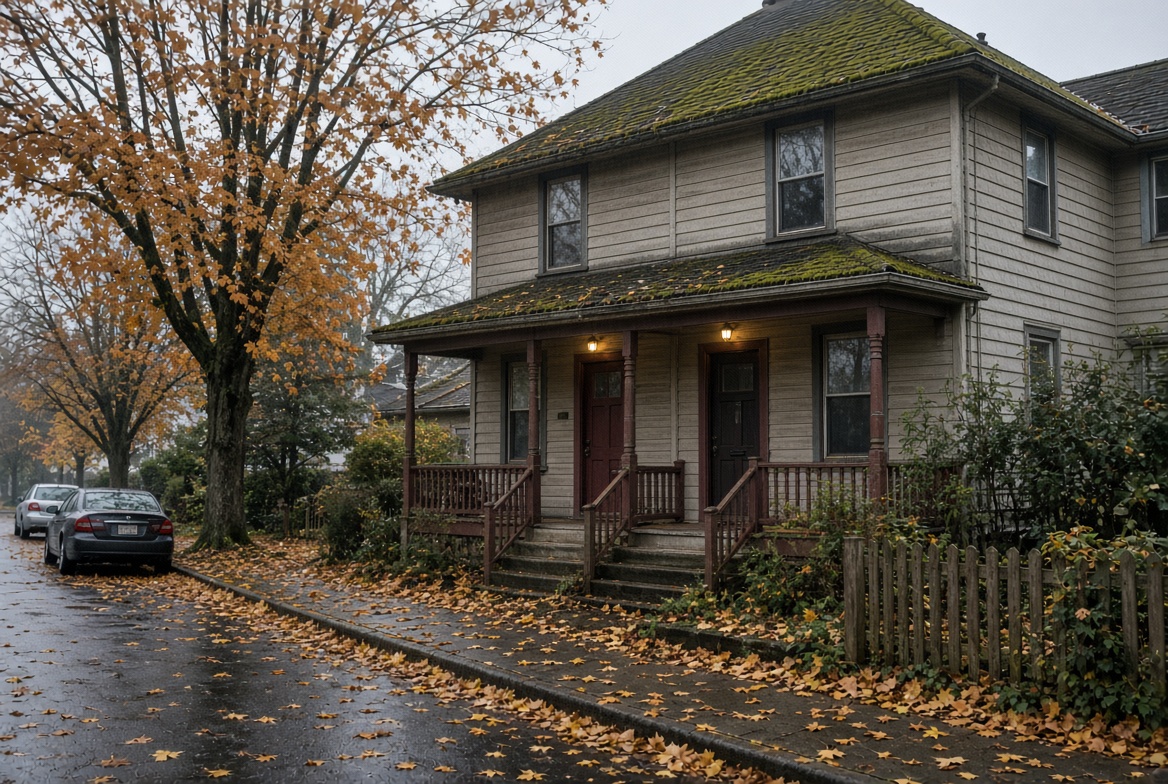
Those are single-family homes, duplexes, and small multiplexes the organization assembled mostly in the early 1980s and held as long-term affordable rentals. Willamette Week put the earlier pipeline in Southeast Portland, with clusters in Buckman and along Division-Clinton. REACH’s own write-up on the Rose City partnership puts the bulk of the 66 in Buckman.

About a third of the units were vacant when the deal closed. Margaret Salazar, REACH’s CEO, told The Oregonian many of the homes need more than a paint-and-carpet turn before a bank will write a mortgage. Roofs, plumbing, heat, electrical — the systems that make a house financeable, and the same systems ORS 90.320 already treats as habitability on a rental.
Of the occupied homes, 22 tenant households had said they wanted to try to buy. REACH is paying for mortgage counseling at the Portland Housing Center. Tenants who did not buy were offered relocation money on a deadline: $12,000 if they were out by the end of January 2026, or $7,200 if they were out by the end of June 2026. Those dates are behind us. What is in front of us is the remaining inventory, the remaining tenancies, and a two-year sell-off that is still underway.
REACH’s letter to residents said the point was two-fold: give some residents a path to own, and pull capital back into the larger multifamily portfolio. Salazar has been blunt that scattered houses do not scale. Fixing a kitchen drain is one job. Opening walls for a system upgrade on 66 floor plans is another.
Why a staffed nonprofit could not keep the houses
If you only read the homeownership headlines, you miss the part that matters on a private duplex.
Shelterforce’s February 2026 look at the same sales put numbers under the decision. Insurance premiums on affordable housing had been jumping 15 to 30 percent a year after COVID. A national LIHTC operating snapshot they cited had repairs and maintenance up about 10.5 percent year over year and insurance up about 22 percent. REACH also sold Laurelhurst Apartments, a 23-unit walk-up, after a roof-and-seismic number north of $275,000 that the rents could not carry.
Scattered sites are worse on that math, not better. No shared boiler. No one roofing contract across a block. Each house has its own roof year, panel, furnace, and water line. A CDC with staff still rolls a truck to a different address every day. That is the same week a private owner of two houses already lives.
REACH’s alternative was ugly: borrow for the repairs and push rents toward market, or wait on city subsidy that had not landed. They chose to stop being the landlord on those 66 and become a seller with counseling attached.
You do not have to like that choice. You do have to notice it. Patient capital with staff looked at houses and duplexes and said the statement no longer worked.
Who gets first look — and who probably does not
Do not picture 66 ordinary investor listings hitting RMLS next Tuesday.
Current tenants have the first shot. After that, REACH and the fund have said first-time buyers and households under 120 percent of AMI are next. Portland Housing Bureau’s four-person median around the announcement was $124,100, so 120 percent sat just under $149,000. Proud Ground, the Urban League of Portland, and NAYA are in the partner list for a reason. Permanently affordable resale limits are on the table for some of these, not a clean flip.
That still moves housing. A third vacant plus households that take the relocation check plus households that cannot qualify still leaves buildings that have to go somewhere. Some will be owned by the people who already live there. Some will be owned by other mission buyers. A few may eventually look like ordinary small-building inventory in inner Southeast. Treat “eventually” as the word it is.
If you own nearby, watch the comps and the condition more than the press release. A $425,000 as-is duplex with a 30-year roof and a tired panel is not the same asset as a $425,000 house that just took a fund-level HVAC swap. Price is not the story. What got opened up before closing is the story.
How to get in line to buy one of these
Some PAROA readers are not looking at this as neighboring inventory. They want to live in one side and rent the other. Online, that now has a brand name I will use once and then put back on the shelf: “house hacking.”
Nobody in 2026 invented living in a duplex and letting the other door help pay the note. That is how a lot of Portland owners got their first rental. It is the oldest cheap door into this business. Influencers did not discover it. They named it so it would fit on a thumbnail.
This section is only about these REACH / Rose City Fund homes. Living in one unit and renting the others is a bigger topic: how you screen the other door, what Portland’s rules do to that rent, and whether the cap still lets the payment work. That is its own article. Look for it next week.
Here is the buying process on this pool, as REACH and the fund have described it.
Current tenants go first. Right of first refusal is real. Twenty-two households had already raised a hand when the deal closed. If a tenant cannot qualify, declines, or takes the relocation check and leaves, that unit can move to the next group. “When the tenant passes” in this story means they pass on buying, not that you wait them out. Do not build a plan that assumes you can hurry that step.
After tenants, the stated order is first-time homebuyers and households under 120 percent of area median income, then mission-aligned nonprofits. REACH’s published goal was at least 50 percent of sales to first-time buyers and 15 percent to current REACH residents. Portland Housing Bureau’s four-person 100 percent AMI figure around the announcement was $124,100, so 120 percent sat just under $149,000. One-person 120 percent was about $104,000. Those numbers move. Confirm them with a counselor, not this paragraph.
“First-time buyer” in this lane usually means you have not owned a home in the last three years. Exceptions exist. Do not self-certify off a blog post.
How you actually watch the list:
Join REACH’s interest list at reachcdc.org/housing/sign-up. That is the notification they pointed buyers to when homes are released for public sale.
Watch REACH’s homes-for-sale / pipeline page. As of mid-September 2026 they were already listing specific Southeast addresses — Buckman and nearby — in the same $350,000 to $600,000 band they announced, with some on Zillow. The original 66 is already a smaller number on that page because some have moved.
Email homeownership@reachcdc.org and ask to be on the Rose City Fund / REACH for Homeownership updates. Do not expect them to hold a house for a cold call.
Get in a counseling file before a listing you want hits the seven-day window. REACH’s own listing rule: for the first seven days a home is listed, preference goes to offers from first-time buyers, income-qualified households, and households that finished housing counseling in the past 12 months. If you wait until the Zillow photo is up, you are already late.
The counseling, down-payment help, and mortgage file run through REACH’s named partners. A Facebook thread will not put you on the interest list or get you a loan.
Portland Housing Center is the mortgage-counseling shop REACH named for its own tenants. Outside buyers use them too. They also run down-payment products and can tell you whether a city Down Payment Assistance Loan even applies to the address you want. City DPAL is usually first-time buyer, counselor-ready, and often capped at 100 percent AMI — tighter than the 120 percent REACH used for this sale’s buyer priority. Do not assume the REACH income cap and the city loan cap are the same number.
Proud Ground is on the partner list because some of these may land in a community-land-trust or restricted-resale structure. That can make the price possible. It also means you do not get a clean market flip later, and owner-occupancy rules are not a suggestion. Read the restriction before you fall in love with the porch.
Urban League of Portland and NAYA are the other named partners. If that is your community channel, start there rather than treating REACH’s inbox as the only door.
Two buyer traps that are specific to this inventory.
One: as-is versus repaired. Salazar said a bank wants system upgrades. A vacant third of the portfolio is not the same as a vacant, lender-ready third. Price the roof, heat, plumbing, and electrical as if you will live there, because the program wants an owner-occupant, not a silent investor.
Two: a duplex or multiplex with someone still behind the other door. You can want to live in one unit and rent the rest. You still bought the tenancy that is already there. That is the whole legal sentence this article will give you. Next week’s piece is where we walk the operating version of owning both doors.
If you want a shot at one of these 66, the work this month is the interest list, a counseling file, and a pre-approval that survives a 120 percent AMI worksheet — not a group chat about which tenant might move. Look for the longer owner-occupant-and-rent-the-other-unit article next week.
What a private owner should actually watch
A deed change does not end a rental agreement. If a home in this pool still has a tenant when it sells, the new owner buys that tenancy. Oregon landlord-tenant law runs with the dwelling, not the old letterhead. That is the whole procedure warning in this article.
The rest of the owner watch-list is simpler. Walk condition the way Salazar described it — systems, not a cute kitchen. Vacant on this portfolio often means the last turn was deferred. Buckman and Division-Clinton already mix private 1–4s with long-held nonprofit houses; some of those houses becoming owner-occupied shrinks the rental set on the block, and some staying rented under a mission owner gives you a neighbor whose rent target is not yours. REACH is taking proceeds back into larger buildings. That is the same triage small owners do quietly: keep the fourplex that almost works, stop feeding the house that needs a re-pipe. They just said it out loud.
and now a couple shameless plugs.
If you own one to four units in the Portland Metro and you want other owners in the room when a story like this hits — not a Facebook thread, a Helpline and a class calendar — the Portland Area Rental Owners Association (PAROA) is built for that. Landlord forms, the operating questions this inventory will raise, and people who already own the same product. Join at www.paroa.org.
If the week-to-week work on those houses is what is actually breaking the statement — vendors, turns, the habitability list — Northwest Real Estate and Property Management (NWRPM) already runs that work for Portland Metro and Central Oregon owners. Details at www.nwrpm.com.
The cost stack did not stay on the nonprofit side
We already walked the insurance half of this in Oregon Rental Insurance 2026: Why Owner Premiums Keep Eating the Rent. Shelterforce’s REACH piece is the same stack from the other side of the aisle: premiums, roofs, and repairs moving faster than the rent the operator is allowed or willing to charge.
Private owners are not exempt from that. ORS 90.323 still caps most covered tenancies. For calendar year 2026 the published maximum on ordinary rentals 15 years or older is 9.5 percent, once in twelve months, not in year one. Inside Portland, PCC 30.01.085 can still attach relocation to a large enough jump in rent or landlord-controlled charges. The cap does not care that your carrier just repriced the dwelling.
So the REACH decision is not “nonprofits are special.” It is “small buildings with individual systems are expensive to keep habitable, expensive to insure, and slow to recoup.” A private owner does not get a Rose City Fund. You get a bid from a roofer and a renewal letter.
That is why this sale belongs on a landlord news page. Not because you should copy the exit. Because the exit is data. A patient owner with staff, counsel, and a statewide reputation still decided 66 small buildings were the wrong place to park scarce repair dollars.
What this is not
It is not proof that every house rental in Portland is finished. REACH is still breaking ground on larger affordable buildings. They said the scattered sites were the problem child, not the whole mission.
It is not a hidden inventory dump for cash buyers who want to skip the line. The stated order is tenant, then income-qualified first-time buyer, then mission partner. The seven-day preference window on new listings is how they enforce that. Believe the order until a specific listing proves otherwise.
It is not a tutorial on ending a tenancy so you can sell. If that is the class you need, that class already exists. This article stops at the observation: when a building changes hands with someone living in it, the tenancy is part of what sold.
Watch the next twelve months the way you watch any other inner-Southeast supply story. Who closed. What got repaired. Whether the vacant third came out owner-occupied or as tired rentals with a new name on the tax bill. That is the part that shows up on your block.
Christian Bryant
President of both the Portland Area Rental Owners Association (PAROA)
If you want the Helpline and the owner room when nonprofit inventory and private 1–4s start sharing the same streets, join PAROA at www.paroa.org.
If you would rather have a local team run the turns and the vendors on Portland Metro or Central Oregon rentals while you watch the market, use NWRPM at www.nwrpm.com.


.png)

Comments